The allure of a well-crafted murder mystery lies not just in who committed the crime, but in the intricate dance between author and reader, a game of wits culminating in that gasp-inducing moment: the twist. As acclaimed author Anthony Horowitz eloquently demonstrates in the video above, mastering the art of the murder mystery twist is a skill that separates good crime fiction from truly unforgettable narratives.
For aspiring writers and devoted fans of the genre alike, understanding the anatomy of a compelling twist offers profound insights into storytelling. It’s about more than just a surprise; it’s a fundamental shift in perspective that redefines everything you thought you knew.
What Makes a Murder Mystery Twist Truly Great?
Anthony Horowitz defines a twist as “the reverse of expectations.” It’s a moment when the narrative takes a sharp, unexpected turn, forcing the reader to re-evaluate prior events and assumptions. This isn’t merely a reveal, like discovering “it was the butler,” but a deeper alteration of the story’s foundational truths.
The iconic twist in the 1968 film *The Planet of the Apes*, which Horowitz cites as perhaps the greatest of all time, perfectly illustrates this principle. Charlton Heston’s shocking discovery of the ruined Statue of Liberty on a distant shore dramatically recontextualizes his entire journey. The alien world he fought against was, in fact, future Earth. This revelation doesn’t just surprise; it utterly transforms the viewer’s understanding of the protagonist’s beliefs and the film’s message about humanity.
Decoding the Anatomy of a Twist: More Than Just a Surprise
A true murder mystery twist doesn’t just appear out of nowhere. It’s a carefully constructed narrative device designed to resonate profoundly. Here’s what makes it work:
- The Reverse of Expectations: As Horowitz emphasizes, the core of any effective twist is to lead the audience down a seemingly obvious path, only to dramatically reverse their understanding. This isn’t about fooling the reader, but about challenging their preconceived notions.
- Recontextualization: The best twists compel the audience to look back at the entire story through a new lens. Every interaction, every clue, every character motivation suddenly takes on a different meaning.
- Emotional Impact: A great twist evokes a strong emotional reaction—shock, disbelief, even a sense of betrayal (in a good way!). It’s a punch to the gut that leaves a lasting impression.
- Fair Play: Crucially, the twist must feel earned. All the necessary information, all the subtle clues, should have been present in plain sight throughout the narrative. The reader *could* have guessed it, but the author masterfully distracted them.
Horowitz offers a hypothetical example: instead of the butler simply being the killer, imagine a twist where the butler and master have secretly swapped places due to blackmail or a secret agreement. The “butler” did it, but it wasn’t the person you thought was the butler. This deepens the surprise and adds layers of complexity.
The Genesis of a Crime Writer: Anthony Horowitz’s Journey
Horowitz reveals that his passion for crime writing ignited early. At 17, receiving the complete works of Conan Doyle, featuring the legendary Sherlock Holmes, cemented his calling. He loved the mystery, the surprise endings, the characters who lied, and the intricate web of clues and suspects. This early immersion in classic detective stories shaped his foundational understanding of the genre.
Later, during a gap year at 19, he embarked on a journey from Darwin, Australia, back to London, voraciously reading and swapping Agatha Christie books at every youth hostel. This period of intense reading introduced him to the masterful plotting and misdirection of Christie, as well as other Golden Age crime writers like Dorothy L. Sayers, Ngaio Marsh, and Josephine Tey. These literary giants laid the groundwork for his own distinctive style, emphasizing clever plotting and the art of the unexpected.
The Golden Rule of Fair Play: Challenging and Respecting Your Reader
One of Horowitz’s most critical pieces of advice for crafting a compelling murder mystery is the concept of “fair play.” He emphasizes that while the twist should be surprising, the reader should never feel cheated. All the clues must be present in the narrative, hidden in plain sight, allowing the perceptive reader the chance to piece together the truth.
This principle, inherited from the likes of Agatha Christie, means that upon discovering the twist, the reader should exclaim, “I never saw that coming, but I *should* have!” Horowitz even tests this by asking his initial readers if they guessed the ending. If they did, he might tweak it, but if they couldn’t possibly have, he knows he hasn’t played fair. Achieving this delicate balance between revelation and subtle misdirection is a hallmark of truly skilled crime writing.
Mastering the Blueprint: Planning Your Murder Mystery
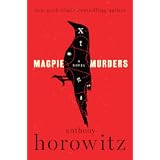
Ideas for murder mysteries, Horowitz admits, often arise organically, but their execution requires meticulous planning. For him, the planning phase often dwarfs the writing phase, sometimes taking years for complex novels like *Magpie Murders*, which took a decade to outline and two years to write. This extensive pre-work is vital for ensuring every clue, every red herring, and every twist fits perfectly into the overarching narrative.
Horowitz documents everything: copious notes, character sketches, timelines, and diagrams, creating a comprehensive “map” of the story. This detailed preparation ensures that by the time he sits down to write, the foundational structure is solid. He even shares glimpses of his original notebook for *The Word Is Murder*, revealing how initial ideas for characters (Lawrence Feldman, David Griffin, Raymond Boyd, John Leslie) and plot points evolve and transform. Even seemingly random notes about Psalm 23 or Eleanor Rigby can become subtle, thematic clues integrated into the story’s fabric, offering readers an enriching subtext.
While Horowitz is a meticulous planner, he also acknowledges that every writer’s process is unique. He recalls a conversation with crime writer Don Winslow, who prefers to “just start writing and see what comes up.” This highlights the essential truth: there are no absolute rules in writing, only strategies that work best for individual creators. The key is to find a planning method that supports your creative flow and allows your ideas to blossom.
The Art of Absorption: Living Within Your Story
Beyond meticulous planning, Horowitz champions the practice of “absorption” during the writing process. Rather than viewing the story from an external, critical perspective, he advises writers to immerse themselves completely within the world they are creating. “Don’t stand on the edge of the book… Live inside the book, looking around you,” he instructs.
This means truly experiencing what your characters see, smell, hear, and feel. By adopting this internal perspective, writers can connect with their narrative on a deeper emotional level, allowing the story to unfold naturally as if they are merely observing and transcribing events. Horowitz even describes it as “listening” to his characters speak and acting like a “court stenographer,” rapidly documenting their dialogue rather than consciously crafting it. This immersive approach allows for a flow state where creativity thrives, unburdened by self-doubt or external pressures.
Breaking the Mold: Finding Your Unique Writing Path
When asked about the “dos and don’ts” of writing a whodunit, Horowitz’s surprising answer is: “there aren’t any.” While fundamental principles like entertainment value, strong writing, and living characters are crucial, true success often comes from defying convention. It’s about “doing the don’ts and not doing the dos,” by producing a completely original book that pushes boundaries and subverts expectations.
This philosophy encourages writers to embrace their unique voice and vision rather than strictly adhering to formulaic approaches. The unexpected, the truly original, is what captivates readers and publishers alike. While he loves surprising people with twists, Horowitz is quick to add the caveat that a twist cannot be the sole pillar holding a book together. A compelling narrative is built on many strong elements, with the twist serving as a powerful, enhancing component.
The Core Idea: Anthony Horowitz’s A + B = C Formula
For anyone embarking on writing a murder mystery, Horowitz offers a deceptively simple yet profoundly effective starting point: the A + B = C formula.
- A = One Person
- B = Another Person
- C = A Reason Why A Murders B
This formula represents the “bullseye” of your story. The originality and intrigue of ‘C’—the unique motivation behind the murder—is paramount. Once you have a compelling and surprising ‘C,’ you can then expand outwards: who are A and B? What are their backgrounds? How did their worlds collide? Who knows them? This “blossoming flower” approach allows a potent core idea to unfurl into a rich, complex murder mystery plot.
The journey of writing a novel, especially one filled with intricate details and a shocking murder mystery twist, is a significant undertaking. It requires complete faith in your original idea, a commitment that can span years of your life. His final, empowering advice: “Don’t think about it, don’t talk about it, just go out there and do it.” This call to action encourages aspiring authors to dive into the work, trust their process, and bring their unique visions to life, crafting memorable narratives and unexpected murder mystery twists for eager readers.
Beyond the Final Twist: A Q&A with Anthony Horowitz
What is a murder mystery twist?
A murder mystery twist is an unexpected turn in the story that reverses expectations, forcing the reader to re-evaluate everything they thought they knew about the narrative.
What does ‘fair play’ mean in writing a murder mystery?
‘Fair play’ means that all the necessary clues for the twist should be present in the narrative, hidden in plain sight, so the reader could have potentially figured it out.
How does Anthony Horowitz plan his murder mystery novels?
Anthony Horowitz plans meticulously, often for years, by creating copious notes, character sketches, timelines, and diagrams before he begins writing the book.
What is the ‘A + B = C’ formula for starting a murder mystery idea?
This formula suggests starting with ‘A’ (one person) + ‘B’ (another person) = ‘C’ (a compelling and unique reason why A murders B). The ‘C’ represents the core, original idea for the story.