Imagine, for a moment, the year is 1916. A young woman, Agatha Miller, harbored a nascent desire to write a mystery novel. Her older sister, Madge, a published author herself, scoffed at the idea, betting Agatha couldn’t create a compelling enough mystery to stump even her. That wager ignited a spark that would eventually give birth to nearly 100 legendary mysteries, establishing Agatha Christie as the best-selling novelist of all time. As explored in the accompanying video, Christie’s unique approach to crafting these intricate “puzzle box” narratives wasn’t accidental; it was a carefully constructed formula, a masterclass in psychological manipulation and structural genius. Let’s delve deeper into the secret ingredients that made her work not just popular, but enduring.
The Power of Place: Crafting Isolated Worlds
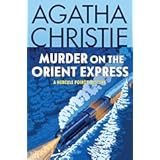
Agatha Christie understood that a mystery’s foundation often lies in its setting. She famously favored locations that were not just remote, but actively isolated from society. Think of the snow-bound Orient Express, a luxurious train turned mobile prison, or the desolate St. Honoré island in And Then There Were None. This strategic choice served multiple, crucial purposes in her murder mysteries.
Firstly, isolating her characters physically created a finite pool of suspects. There’s no escaping, no convenient new arrival to divert suspicion, forcing readers to focus solely on the individuals trapped within the narrative’s confines. This geographical constraint is a powerful tool for building tension, as every character is forced to remain in close proximity to a killer, their paranoia and distrust intensifying with each passing page.
Beyond the practicalities, these isolated settings amplify psychological drama. Imagine the claustrophobia aboard a ship in the middle of the Nile or the chilling realization in a remote country estate that the murderer is one of your dinner companions. Such environments strip away the usual comforts and certainties, forcing characters (and readers) to confront their fears and vulnerabilities directly. This sense of inescapable dread is a hallmark of Christie’s genius, transforming seemingly ordinary places into stages for extraordinary crimes.
Beyond Physical Boundaries: Psychological Isolation
While physical isolation is overt, Christie also masterfully employed psychological isolation. By gathering a group of strangers, as she often did, she heightened the sense of unease. Characters had no pre-existing loyalties or knowledge of one another’s true natures, making everyone a potential suspect. This approach cleverly mirrored the reader’s own experience, plunging them into an unfamiliar social landscape where trust is a dangerous commodity. It’s a key element in her “perfect crime” blueprint, ensuring that the human drama is as captivating as the puzzle itself.
Characters as Ciphers: The Art of Predictable Personalities
One common critique of Agatha Christie’s novels is the perceived two-dimensionality of her characters. Yet, as the video highlights, this wasn’t a flaw but a deliberate choice. Christie understood that in a puzzle-driven mystery, overly complex characters could distract from the central whodunit. By reducing individuals to a handful of predictable traits, she offered readers a clear set of suspects to analyze and, crucially, to misinterpret.
This simplification allows the reader to quickly categorize and form assumptions about characters: the grumpy colonel, the flighty young woman, the secretive academic. These archetypes become signposts, guiding (and often misguiding) the reader’s deductions. The real brilliance lies in how Christie then subverts these expectations, revealing that the most seemingly innocuous or stereotypical character could harbor the darkest secrets. This playing with reader anticipation is central to her mystery writing strategy.
The Double-Edged Sword: Stereotypes and Evolution
However, it’s important to acknowledge, as mentioned in the video, that this reliance on archetypes sometimes veered into harmful stereotypes, particularly regarding certain occupations and ethnic groups common in her contemporary setting. Christie, like many writers of her era, occasionally caricatured characters for comic effect or to quickly establish a type, reinforcing prejudices of the time. This aspect of her work is certainly not one to emulate in modern mystery writing.
Fortunately, the landscape of crime fiction has evolved significantly. Modern mystery writers have found far less problematic ways to create distinct, memorable characters without resorting to harmful tropes. They might focus on unique mannerisms, specific professions, or subtle psychological quirks that define a character’s “type” while maintaining respect and depth. The lesson from Christie isn’t to create flat characters, but to understand how character traits, even simplified ones, can serve the larger narrative puzzle, drawing the reader into the game of deduction.
The Eloquent Clue: Misdirection and Deception in Mystery Writing
For any Agatha Christie fan, the joy of reading her murder mysteries lies in the meticulously laid trail of clues and the cunning misdirection that often leads to a stunning reveal. Christie was a master architect of information, ensuring her clues were memorable yet rarely fully understood by the reader until the final explanation.
Consider the classic example provided in the video: a character complains that “everything tastes foul today” just moments before collapsing from poison. The immediate reader’s reaction is to suspect the drink consumed just prior to death. Yet, the phrase “everything” implies a broader, perhaps longer-term, poisoning. This subtle linguistic trick is pure Christie – a clue that is perfectly visible but its true significance only becomes apparent in hindsight.
Varieties of Misdirection
Christie didn’t just hide clues; she actively used them to mislead. Her techniques for misdirection in mystery writing were varied and sophisticated:
- The Red Herring: A seemingly crucial clue or suspect introduced specifically to divert the reader’s attention from the real culprit. Imagine if a valuable locket, seemingly connected to the victim, is found in one suspect’s room, only for it to be revealed later that they were framed or that the locket was entirely irrelevant to the murder.
- Framing Devices: Planting evidence that points to an innocent party. This often involves the killer cleverly utilizing existing tensions or relationships to make someone else seem guilty.
- Structural Misdirection: Perhaps the most audacious form, where the very narrative structure is designed to deceive. The video mentions a narrator who turns out to be the killer – a technique that profoundly disorients the reader and challenges their trust in the storytelling itself. Such twists were revolutionary and solidified Christie’s reputation for unparalleled ingenuity.
- The Psychological Clue: Beyond physical objects, Christie often embedded psychological clues. A character’s unusual reaction, a slip of the tongue, or a seemingly insignificant habit could, in retrospect, point directly to their guilt or complicity. These subtle hints often require the reader to actively engage with the characters’ inner lives and motivations.
The key to Christie’s clues and misdirection is balance. They are designed to be discernible upon rereading, rewarding the attentive reader, but sufficiently obscured or misinterpreted on the first pass to maintain suspense. This delicate equilibrium prevents the mystery from becoming either too predictable or too convoluted, ensuring that the final reveal is both surprising and satisfying.
The Outsider Eye: The Enduring Appeal of Christie’s Detectives
No exploration of Agatha Christie’s formula would be complete without acknowledging her iconic detectives. Hercule Poirot, the fastidious Belgian refugee with his “little grey cells,” and Miss Jane Marple, the elderly, seemingly unassuming amateur detective, are far from traditional heroes. Yet, their very “outsider” status is precisely what makes them so effective in her murder mysteries.
Poirot, with his foreign origin and peculiar mannerisms, often finds himself underestimated by the English upper crust he investigates. This allows him to observe without drawing suspicion, and suspects often let their guard down, underestimating his keen intellect. His meticulous attention to detail and reliance on psychological analysis rather than brute force makes him a unique and formidable investigator.
Miss Marple, too, benefits from being an outsider. Her elderly, gentle demeanor often leads people to dismiss her as a harmless busybody. However, her deep understanding of human nature, honed from years of observing the inhabitants of her village, St. Mary Mead, allows her to recognize patterns of behavior and motive that elude professional police. She sees the world through the lens of timeless human vices and virtues, often drawing parallels between a grand crime and a village squabble.
These detectives highlight a crucial element in effective mystery writing: the perspective of the investigator. By presenting a sleuth who operates outside conventional societal expectations, Christie provided a fresh lens through which to view human folly and criminal intent. Their unique methodologies, combined with their endearing quirks, make them as central to the formula as the crimes themselves, offering a comforting guide through the intricate webs of deception.
Building the Right Amount of Suspense
As the video aptly concludes, even with perfect settings, cunning characters, and clever clues, one final essential element remains: suspense. It’s the engine that propels the reader forward, leaving them on edge, waiting with bated breath for the truth to be revealed. Agatha Christie’s murder mysteries are renowned for their ability to maintain this palpable tension from the first discovery to the final, shocking explanation.
Building suspense isn’t just about withholding information; it’s about carefully managing its release. Christie achieved this through:
- Rising Stakes: Each subsequent event, be it another murder, a new threat, or a shocking revelation, increases the pressure on the characters and the reader.
- Foreshadowing: Subtle hints or ominous predictions scattered throughout the narrative create a sense of impending doom, making the reader anticipate what’s to come.
- Pacing: Varying the rhythm of the story, alternating between moments of intense action or discovery and periods of contemplation or character interaction. This ebb and flow keeps the reader engaged without exhaustion.
- False Resolutions: Occasionally, Christie would present a seemingly logical solution to the mystery, only to dismantle it shortly after, further entangling the plot and increasing the reader’s desperate need for the true answer.
- Psychological Manipulation: By making characters question each other’s motives and trustworthiness, or by having them receive anonymous threats, Christie instilled a sense of pervasive paranoia that mirrored the killer’s unseen presence.
The delicate art of cultivating suspense is what elevates a mere puzzle into a truly immersive experience. It’s the ingredient that transforms a series of events into a thrilling narrative, making the reader actively participate in the hunt for the truth. Understanding how to build this tension, much like uncovering the other facets of Agatha Christie’s murder mysteries, is vital for any aspiring writer looking to craft compelling crime fiction.
Unraveling the Formula: Your Questions Answered
What was special about Agatha Christie’s way of writing mysteries?
Agatha Christie used a carefully planned ‘formula’ to create complex ‘puzzle box’ narratives, known for their psychological depth and clever structure.
Why did Agatha Christie often choose isolated places for her stories?
Isolated settings, like a remote island or a snow-bound train, helped limit the number of suspects and intensified the tension and psychological drama among the characters.
How did Agatha Christie create her characters in mysteries?
She often used simpler, predictable character types, or archetypes, to allow readers to focus on solving the mystery and to cleverly misdirect their suspicions.
What is a ‘red herring’ in one of her mysteries?
A ‘red herring’ is a misleading clue or suspect that Agatha Christie introduces to divert the reader’s attention away from the actual killer or solution.
Who are Agatha Christie’s most famous detectives?
Her two most iconic detectives are Hercule Poirot, a fastidious Belgian refugee, and Miss Jane Marple, an elderly and seemingly unassuming amateur sleuth.