Unlocking the Enigma: Exploring Top Mystery Novels for Every Reader
Globally, mystery novels consistently rank among the most popular literary genres, captivating millions of readers with intricate plots and compelling characters. Within this vast landscape, certain stories are distinguished by their cleverness, emotional depth, or groundbreaking narrative techniques. The video above offers a personal journey through some of the most cherished works in this field, curated by a passionate reader.
For those seeking to delve deeper into the captivating world of crime and detection, or perhaps discover a new favorite, further insights into the genre are presented below. The allure of a well-crafted mystery is often found in its ability to challenge the reader, inviting them to piece together clues alongside the protagonist. This immersive experience is what sets true mystery novels apart from other forms of crime fiction.
What Defines a True Mystery Novel?
The distinction between a mystery novel and a thriller is often debated among readers and authors alike. Fundamentally, a mystery is characterized by a clear question that is posed to the reader, typically “Who did it?” or “What happened?” The narrative is meticulously constructed so that clues are presented throughout, allowing a reasonable reader to deduce the solution by the story’s conclusion. This intellectual engagement is a cornerstone of the genre.
Conversely, thrillers are frequently driven by suspense and often feature unreliable narrators, making it nearly impossible for the reader to independently solve the central enigma. While both genres can be highly entertaining, the satisfaction derived from unraveling a carefully laid plot, where all necessary information is made available, is unique to the mystery novel. This emphasis on logical deduction ensures that a fair play is offered to the audience.
The Enduring Appeal of Detective Fiction
The magnetism of detective fiction is undeniable, with its rich history and diverse subgenres appealing to a broad audience. From the classic whodunits of the Golden Age to contemporary psychological puzzles, readers are consistently drawn to stories that explore the darker aspects of human nature while simultaneously celebrating ingenuity and justice. The meticulous construction of a mystery, where every detail can be a potential clue, is often appreciated by those who enjoy intellectual challenges.
Moreover, the characters within these narratives, particularly the detectives themselves, often become iconic figures. Their unique methods of deduction, personal quirks, and evolving relationships with their companions contribute significantly to the appeal. Whether it is a brilliant amateur sleuth or a seasoned professional, these characters are often seen as guides through complex moral landscapes, offering a sense of order in a chaotic world.
The Speaker’s Top 9 Mystery Novels: An Expanded Look
The following selections are presented as notable examples within the mystery genre, each offering a distinct experience for the reader. They represent a spectrum of styles and approaches, demonstrating the breadth and depth that can be found in mystery literature.
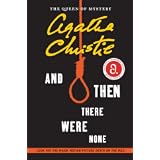
1. *And Then There Were None* by Agatha Christie
This groundbreaking novel, first published in 1939, is widely recognized as one of the earliest and most influential examples of the locked-room mystery. Its premise involves eight strangers, each invited under mysterious circumstances to an isolated island. As the guests begin to be systematically killed off, it becomes chillingly clear that the perpetrator must be one of them. The tension is masterfully sustained, compelling readers to question every character’s motive and every cryptic clue.
The book’s structure has inspired countless imitations and adaptations across various media, yet few are said to capture the original’s unique literary magic. It is considered a relatively accessible and thoroughly enjoyable read, perfect for those new to Christie’s work or the locked-room subgenre. The narrative’s cleverness and the psychological depth of its characters are consistently highlighted by readers.
2. *Mystic River* by Dennis Lehane
Set against the gritty backdrop of Boston, *Mystic River* is a slow-burn psychological mystery that explores the profound and lasting impact of trauma. The story intertwines the lives of three childhood friends: Jimmy, Sean, and Dave. Their lives are irrevocably altered when, as boys, Dave is abducted and subjected to horrific abuse for four days. Decades later, specifically 25 years after the initial incident, a new tragedy unfolds when Jimmy’s daughter is brutally murdered.
Sean, now a detective, is tasked with investigating the crime, while Dave, still haunted by his past, becomes the prime suspect. The novel is celebrated for its deep exploration of emotional repercussions and moral ambiguities, rather than focusing solely on the “whodunit.” It is a powerful narrative that delves into themes of justice, fate, and the unbreakable bonds of friendship and community, captivating readers until its very last page.
3. *The Word Is Murder* by Anthony Horowitz
Anthony Horowitz, a celebrated modern author known for his deep affection for classic mystery, offers a unique meta-fictional experience with *The Word Is Murder*. This novel is the first in the Hawthorne and Horowitz series, where a fictionalized version of Horowitz himself is depicted as following a retired, eccentric detective named Daniel Hawthorne. This setup brilliantly pays homage to the traditional Watson-Holmes dynamic, with Horowitz acting as the chronicler of Hawthorne’s escapades.
The series is lauded for its ingenious blend of Horowitz’s actual life details with a captivating fictional world, offering readers a fascinating glimpse into the process of crafting a murder mystery. The intricate plots are woven with humor and an impressive dedication to genre conventions, while also subverting them in clever ways. Four installments have been released so far, with a fifth eagerly anticipated, each consistently praised for its high quality and engaging characters.
4. *The Cuckoo’s Calling* by Robert Galbraith (J.K. Rowling)
Under the pseudonym Robert Galbraith, J.K. Rowling introduces readers to the world of Cormoran Strike, a down-on-his-luck private detective, in *The Cuckoo’s Calling*. The story begins when Strike is hired to investigate the alleged suicide of a famous supermodel, a case that quickly unravels into a complex murder mystery. Concurrently, his path crosses with Robin Ellacott, who is hired as his temporary assistant and soon becomes an indispensable partner.
The series, currently comprising seven novels with an eighth expected, is particularly celebrated for its richly developed characters. Strike and Robin’s evolving professional and personal relationship forms a compelling core, drawing readers into their lives as much as the mysteries they solve. While some readers suggest that parts of the series, particularly around book five, become somewhat verbose, the most recent installment is often cited as a significant return to form, underscoring the enduring appeal of its central duo.
5. *The Murder of Roger Ackroyd* by Agatha Christie
Agatha Christie once again demonstrates her unparalleled mastery of the mystery genre with *The Murder of Roger Ackroyd*, a novel frequently cited for its profound impact on the landscape of detective fiction. When it was first published, this Hercule Poirot mystery was considered an absolute game-changer, shattering established narrative conventions in a way that has rarely been replicated or surpassed.
The story is narrated by Dr. James Sheppard, whose patient, Roger Ackroyd, is found murdered shortly after the death of the woman he intended to marry. Poirot’s investigation unfolds from Sheppard’s perspective, guiding the reader through a maze of suspects and secrets. The less that is known about its specific plot twist before reading, the greater the impact, as its ingenious structure continues to astound readers decades later. Its brevity and quick pacing make it an ideal choice for a compelling and thought-provoking experience, often prompting rereadings to fully appreciate its masterful construction.
6. *The Maid* by Nita Prose
Nita Prose’s debut novel, *The Maid*, introduces readers to Molly Gray, a hotel maid who discovers a dead body in one of the rooms. The ensuing mystery is narrated through Molly’s unique and heartwarming perspective; she is described as being neurodivergent, though not explicitly labeled, which shapes her understanding of social cues and the world around her. This distinctive narrative voice is celebrated for being both humorous and deeply endearing.
The book is often characterized by its charm and readability, with Prose’s writing style frequently praised as a sheer joy. Its characters are depicted as extremely likable, contributing to its broad appeal, even for those who may not typically gravitate towards mystery novels. The story is concise yet impactful, with many readers reporting it can be devoured in a single day. A sequel, released in the same year the video was recorded, has also been met with enthusiasm, indicating the lasting appeal of Molly’s world.
7. *The 7½ Deaths of Evelyn Hardcastle* by Stuart Turton
*The 7½ Deaths of Evelyn Hardcastle* is a mind-bending, genre-defying mystery that presents a truly unique premise. The protagonist awakens with no memory, only to discover he must relive the same day repeatedly, each time inhabiting a different body, until he uncovers the murderer of Evelyn Hardcastle. This cyclical narrative spans one week, during which his actions in one body can subtly influence events and interactions in others.
This complex framework is skillfully managed by Turton, resulting in a surprisingly easy-to-follow yet deeply intricate plot. The novel is celebrated for its exceptional prose, multi-faceted characters (even the temporary hosts), and a plot that is both intellectually stimulating and viscerally engaging. It is regarded as a standout work that offers a fresh and innovative take on the classic murder mystery, appealing especially to those who appreciate experimental storytelling within familiar genres.
8. *The Devil and the Dark Water* by Stuart Turton
Stuart Turton continues his tradition of crafting difficult-to-categorize yet undeniably compelling mysteries with *The Devil and the Dark Water*. This novel transports readers to the high seas in the 17th century, where a renowned detective and his loyal sidekick embark on a voyage to Amsterdam. The journey is quickly plagued by ominous supernatural occurrences and a mysterious murder, all seemingly foretold by a leper’s curse.
The core mystery revolves around identifying the murderer and understanding the source of the malevolent forces disrupting the voyage. However, a significant highlight of the book is its depiction of the rapid deterioration of order and escalating distrust among the ship’s crew, evoking comparisons to a seafaring *Lord of the Flies*. Turton’s characteristic phenomenal prose enhances this fun and terrifying premise, creating an unforgettable reading experience that is considered as groundbreaking as some of the genre’s most classic works.
9. *Magpie Murders* by Anthony Horowitz
*Magpie Murders* by Anthony Horowitz is frequently hailed as a masterpiece of meta-fiction and a profound homage to the mystery genre. This innovative book is, in essence, two novels woven into one. The first part is a complete, traditional British countryside mystery starring the fictional detective Atticus Pünd, an unmistakable nod to classic sleuths like Sherlock Holmes and Hercule Poirot. This “book-within-a-book” flawlessly replicates the style and tropes of Golden Age detective fiction.
However, just as the final chapter of Pünd’s story is to be revealed, the reader is abruptly pulled into the second narrative. This follows Susan Ryeland, the editor of the Atticus Pünd books, who discovers that the manuscript delivered to her is missing its crucial final chapter. When the author of the Pünd series is found murdered, Susan embarks on her own investigation, realizing that the solution to his death may lie within the pages of the very book she was editing. This ingenious structure allows Horowitz to both celebrate and comment on the conventions of the genre, offering a brilliantly intricate puzzle that delights fans of classic detective stories and provides a unique commentary on the publishing world. A sequel continues this compelling dual-narrative format with similar success.
The Final Deduction: Your Questions Answered
What is a mystery novel?
A mystery novel typically presents a clear question, like “Who did it?” or “What happened?” It provides clues throughout the story, allowing the reader to try and deduce the solution by the end.
How is a mystery novel different from a thriller?
Mystery novels focus on solving a central puzzle with clues available to the reader, emphasizing logical deduction. Thrillers, on the other hand, are often driven by suspense and may feature unreliable narrators, making it harder to independently solve the enigma.
Why do people enjoy reading mystery novels?
Readers are drawn to mystery novels for their intricate plots and intellectual challenges, as every detail can be a clue. They also enjoy exploring human nature and the celebration of ingenuity and justice found within these stories.
Are there different types of mystery novels?
Yes, the mystery genre is quite diverse, ranging from classic “whodunits” of the Golden Age to contemporary psychological puzzles. The article also mentions specific types like the “locked-room mystery” where a crime occurs in an impossible setting.