Finding your next captivating read can be a delightful, yet sometimes daunting, challenge, especially when delving into specific genres like historical mystery. For enthusiasts and newcomers alike, the quest for compelling narratives set against richly detailed pasts often requires a reliable guide. Fortunately, the accompanying video offers a fantastic starting point, providing a curated list of beloved historical mystery series that promise intrigue, immersive settings, and unforgettable characters. This complementary guide delves deeper into the appeal of these recommended series, expanding on their unique elements, historical contexts, and what makes each a standout in the vibrant world of historical mystery fiction.
Historical mysteries possess a distinct allure, blending the suspense of a whodunit with the fascinating tapestry of bygone eras. These stories transport readers to periods fraught with social norms, technological limitations, and political turmoil that profoundly shape the crimes and their investigations. From the gaslit streets of Victorian London to the war-torn landscapes of the early 20th century, each setting becomes more than just a backdrop—it’s an active participant in the unfolding drama.
Navigating the Trenches: World War I and Post-War Historical Mystery Series
The early 20th century, particularly the World War I era and its immediate aftermath, offers a fertile ground for historical mystery writers. This period, marked by unprecedented global conflict and profound societal shifts, presents unique challenges and psychological landscapes for characters. The experiences of war often leave indelible marks, influencing their perspectives, capabilities, and the very fabric of their investigations.
Charles Todd’s Bess Crawford Series: An Amateur Sleuth on the Front Lines
The Bess Crawford series, beginning with A Duty to the Dead, serves as an ideal introduction for those new to historical mysteries. Set during World War I, it follows Bess Crawford, a dedicated nurse serving on the Western Front. Her unique position places her at the intersection of human suffering and military protocol, often exposing her to mysteries that official channels might overlook. As an amateur sleuth, Bess navigates investigations without formal authority, a constraint that frequently embroils her in dangerous situations. Readers experience the world through her first-person perspective, sharing her frustrations and triumphs as she pieces together clues amidst the chaos of war.
The series masterfully illustrates the limitations of an amateur investigator in a high-stakes environment. Bess must rely on her sharp wit, compassionate nature, and the trust she builds with those around her, rather than any badge or legal power. This dynamic not only heightens the suspense but also offers a more intimate look at the human cost of war and the personal sacrifices made by those caught within its grasp. The contrast between her healing profession and the violent realities of murder provides a rich narrative tension, pulling readers deeper into her world.
The Ian Rutledge Mystery Series: Shell Shock and Spectral Partners
Another profound contribution from Charles Todd is the Ian Rutledge Mystery Series, which truly stands out for its psychological depth and innovative approach to the detective archetype. Set immediately after World War I, starting with A Test of Wills, this series explores the devastating effects of the war on its protagonist, Inspector Ian Rutledge. He returns to his role in Scotland Yard, grappling with severe post-traumatic stress disorder, then known as “shell shock.” This condition, barely understood at the time, significantly impacts his ability to reintegrate into civilian life and his professional duties.
What distinguishes Rutledge is the constant presence of Hamish MacLeod, a soldier Rutledge was forced to execute for insubordination during the war. Hamish’s voice is a persistent, internal companion, serving as both an antagonist and an unexpected, albeit spectral, partner in solving crimes. This unique dynamic allows Rutledge to process trauma, debate theories, and confront his past in a way rarely seen in the mystery genre. The portrayal of shell shock is particularly poignant, highlighting the silent battles many veterans faced. Rutledge’s struggle to hide his condition, perceived as cowardice by society, adds layers of emotional complexity, making him a deeply empathetic character even as he confronts the darkest aspects of human nature.
Unveiling Victorian Secrets: Mysteries of the Gaslight Era
The Victorian era, with its stark contrasts between opulence and squalor, scientific advancement and rigid social conventions, provides an irresistible setting for historical mystery series. The burgeoning cities, the strict class system, and the limited forensic capabilities of the time create a labyrinth of secrets and deceptions that challenge even the most astute investigators.
Anne Perry’s Enduring Legacies: The Pitt and Monk Series
Anne Perry’s contributions to Victorian mystery are monumental. Her Charlotte and Thomas Pitt Mystery Series is a sprawling epic, allowing readers to grow with its characters over many years. Beginning with The Cater Street Hangman, it introduces Charlotte Ellison, a woman from a respectable, well-to-do family, and Inspector Thomas Pitt, a man of lower social standing. Their marriage, initially unconventional, becomes the bedrock of a series that explores not just criminal cases but also the evolution of their relationship, their family, and the broader Victorian society. The series excels in its vivid descriptions and atmospheric world-building, making readers feel as if they are truly walking the cobbled streets of late-Victorian London. The slow, character-driven pace invites deep immersion, often likened to catching up with old friends.
Perry’s William Monk Mystery Series, starting with The Face of a Stranger, offers a different, yet equally compelling, take on Victorian crime. Set earlier in the mid-Victorian era, it centers on William Monk, a police detective who suffers an accident causing complete amnesia. He awakens with no memory of his past, his professional skills, or even his own personality. This unique premise forces Monk to reconstruct his identity while simultaneously solving complex cases and navigating a world where people react to him with suspicion or disdain, suggesting his pre-amnesia self was far from virtuous. His journey of self-discovery, coupled with his challenging relationship with the strong-willed nurse Hester Latterly, creates an engaging ‘enemies-to-lovers’ subplot, adding emotional depth to the intellectual puzzles he must solve.
A third series, the Daniel Pitt Mystery Series, follows Charlotte and Thomas Pitt’s son, Daniel, as a lawyer in Edwardian England. This series offers a glimpse into the changing times and the legal system, showcasing a new generation’s approach to justice. The unfortunate passing of Anne Perry means the future of this series, like some others, is uncertain, a poignant reminder of the creative collaborations that sometimes come to an end.
Ambrose Parry’s Raven Fisher and Simpson Mystery Series: Medical and Social Intrigue in Edinburgh
Set in Victorian Edinburgh, the Raven Fisher and Simpson Mystery Series by Ambrose Parry (a pseudonym for husband-and-wife writing duo Chris Brookmyre and Marisa Haetzman) brings a unique medical perspective to the historical mystery genre. The first book, The Way of All Flesh, introduces Dr. Will Raven, assistant to the real-life Dr. James Simpson (a pioneer in anesthesia, specifically chloroform), and Sarah Fisher, a housemaid with aspirations of becoming a doctor—a challenging ambition for a woman in that era. The series is lauded for its meticulous historical detail, particularly in depicting the nascent stages of medical science and the grim realities of surgical practice before modern understanding.
These novels are not merely about crime; they are deeply concerned with character development and the social constraints of the time. The slow-burn characterization allows readers to truly invest in Raven, Fisher, and Simpson, understanding their motivations and their struggles within a society grappling with rapid change and entrenched prejudices. The medical angle offers a fresh lens through which to explore crime, utilizing early forensic knowledge and the gritty realities of anatomy and illness to unravel the truth.
Beyond Britain: Diverse Settings for Historical Mystery Readers
While England often dominates the historical mystery landscape, many authors venture further afield, offering fresh perspectives and unique cultural contexts. These series prove that the past is a vast and varied canvas for crime and detection.
S.J. Parris’s Giordano Bruno Series: Tudor Heresy and Intrigue
For those seeking a departure from the 19th and early 20th centuries, S.J. Parris’s Giordano Bruno series, starting with Heresy, plunges readers into the politically charged world of Tudor England in the 1500s. The protagonist is the real-life philosopher and former monk Giordano Bruno, excommunicated for his controversial, ‘heretical’ beliefs. In these fictionalized accounts, Bruno is tasked with uncovering secret Catholic sympathizers amidst the volatile Protestant-Catholic conflict. While the historical Bruno was not a detective, Parris skillfully weaves him into a series of murders, leveraging his sharp intellect and outsider status.
This series offers a fascinating glimpse into a period of religious upheaval and intellectual ferment. The challenges of investigation in an era devoid of modern forensics, coupled with the constant threat of religious persecution and political conspiracy, create a distinctly different kind of suspense. The novel’s decision to place a real historical figure into a fictional crime-solving role, particularly from a first-person perspective, is a bold move that works surprisingly well, offering a unique blend of historical fact and imaginative fiction.
A.M. Stuart’s Harriet Gordon Mystery Series: Singapore’s Colonial Charm
Breaking free from European settings, A.M. Stuart’s Harriet Gordon Mystery Series transports readers to Singapore in 1910. The first book, Singapore Sapphire, immediately establishes a vibrant, non-traditional backdrop for its historical mysteries. Harriet Gordon, a schoolteacher, finds herself drawn into investigations alongside Inspector Robert Kuran. This series provides an intriguing blend of Edwardian colonial life with the rich cultural tapestry of Singapore, offering a refreshing change of scenery for readers accustomed to English settings.
These stories often lean into the ‘cozy’ mystery subgenre, featuring an amateur sleuth and a gentle romantic subplot. However, they maintain a slightly grittier edge than some pure cozies, ensuring the crimes feel substantial without being overly graphic. The exploration of colonial society, cultural clashes, and the nascent local police force adds layers of historical detail that make this series a compelling choice for those seeking something truly distinctive in their historical mystery books.
The Spectrum of Suspense: Cozy vs. Gritty Historical Mysteries
Within the broad genre of historical mysteries, there’s a significant divergence in tone and content, primarily between “cozy” and “gritty” approaches. Understanding this distinction can greatly aid readers in selecting historical mystery series that align with their preferences. While some readers crave the atmospheric charm and focus on character that cozy mysteries provide, others seek a more realistic, darker depiction of crime.
Ashley Weaver’s Amory Ames and Electra McDonnell Series: The Art of Cozy Crime
Ashley Weaver masterfully crafts cozy historical mysteries, delivering compelling puzzles without graphic violence or explicit content. Her Amory Ames Series, starting with Murder at the Brightwell, is set in the glamorous 1930s and features socialite Amory Ames and her charismatic husband, Milo. This series thrives on characterization and elegant period details. Amory and Milo, as amateur sleuths, navigate high society settings, solving crimes that threaten their refined world. The romantic tension between Amory and Milo adds an appealing layer, often hailed as a model for sophisticated romance in a mystery context.
Weaver’s Electra McDonnell Series, beginning with A Peculiar Combination, offers a different cozy setting: London during the Blitz in World War II. Electra, a member of a family of housebreakers, is recruited by Major Ramsey of the secret service for her unique safecracking skills. This series cleverly combines wartime espionage with cozy mystery elements, featuring a delightful romantic subplot between Electra and Ramsey. With four books in the series and new releases continuing to capture readers, it provides a charming escape into a fascinating historical period.
Cozy mysteries, like Weaver’s, often prioritize the intellectual puzzle, the charm of the setting, and the development of endearing characters. They provide an enjoyable, less intense reading experience, focusing on community, relationships, and the satisfying resolution of a crime that typically occurs off-page. This makes them perfect for readers who appreciate intricate plots and witty dialogue without the stark realism of grittier tales.
Jennifer Ashley’s Below Stairs Mysteries: Character and Intrigue Among the Servants
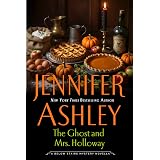
Jennifer Ashley’s Below Stairs Mysteries offer another delightful foray into cozy historical mystery, set in Victorian England. The series follows Kat Holloway, a cook in a wealthy household, as she finds herself entangled in various investigations. As an amateur sleuth of humble station, Kat navigates the rigid class structure of the era, observing the intricacies of both upstairs and downstairs life. This unique perspective provides a fascinating look at Victorian society from the vantage point of those who served within it.
Like many cozy historical mystery series, the appeal of Kat Holloway’s adventures lies heavily in its vibrant cast of characters and the engaging relationships they form. The ongoing romantic subplot with Daniel McAdam, a resourceful ‘Jack-of-all-trades,’ adds a compelling personal dimension to Kat’s crime-solving endeavors. Readers return to these historical mystery books not just for the intriguing puzzles, but for the sheer pleasure of spending time with characters they have come to know and love, experiencing the rich atmosphere of Victorian life through their eyes.
Unraveling the Past: Your Historical Mystery Q&A
What is a historical mystery book?
A historical mystery blends the suspense of a detective story with the detailed setting of a past era. These books transport readers to different time periods where past social norms and technology shape the crimes and their investigations.
What kind of time periods do historical mysteries typically cover?
Historical mysteries can be set in many different eras, such as the gaslit streets of Victorian London, the war-torn landscapes of World War I and II, or even Tudor England in the 1500s. Each historical setting becomes an active part of the unfolding drama.
What is an ‘amateur sleuth’ in a historical mystery series?
An amateur sleuth is a character who solves crimes without formal authority, like a police officer or detective. They often rely on their sharp wit, compassionate nature, and the trust they build with others to uncover clues.
What is the difference between a ‘cozy’ and ‘gritty’ historical mystery?
Cozy historical mysteries prioritize intellectual puzzles, charming settings, and character development, typically avoiding graphic violence. Gritty historical mysteries, in contrast, offer a more realistic and darker depiction of crime and its impact.