A staggering 85% of moviegoers report that a truly unexpected plot twist significantly enhances their overall viewing experience, transforming a good film into an unforgettable cinematic event. Indeed, the art of the reveal in **whodunit movies** stands as a testament to intricate storytelling, meticulously crafted to subvert expectations and leave audiences reeling. As the accompanying video highlights, the most shocking reveals are not merely surprises; they are narrative earthquakes that redefine everything we thought we knew, compelling us to re-evaluate every preceding moment. However, delving beyond the surface of these iconic twists reveals the complex screenwriting and psychological manipulation at play, elements that elevate these films into masterclasses of narrative deception.
Deconstructing the Whodunit: The Art of the Narrative Misdirection
The whodunit genre, with its labyrinthine plots and carefully placed red herrings, thrives on misdirection. Master filmmakers and writers understand that the true power of a plot twist lies not just in its shock value, but in its logical yet unforeseen integration into the story’s fabric. Instead of simply being a narrative gimmick, a great reveal recontextualizes the entire viewing experience, prompting audiences to piece together the clues in retrospect. This intricate dance between what is shown and what is hidden demands a sophisticated understanding of narrative structure and audience psychology.
Consider the evolution of these cinematic surprises; early mystery films often relied on straightforward identity reveals, whereas modern **whodunit movies** frequently explore more complex, psychologically driven twists. This progression reflects an increasing sophistication in audience expectations, requiring writers to innovate continually. Furthermore, the genre’s enduring appeal stems from its interactive nature, where viewers actively participate in the investigation alongside the on-screen detective. This engagement is precisely what makes the eventual reveal so impactful, as it challenges our own deductive reasoning and often exposes our subconscious biases.
“Bodies Bodies Bodies”: When Misunderstanding Kills
The darkly comedic horror film “Bodies Bodies Bodies” delivers a twist that perfectly encapsulates modern paranoia and generational communication breakdowns. Initially, the escalating body count points towards a traditional slasher scenario, with a group of friends turning on each other amid a hurricane. Old grievances and simmering resentments quickly boil over, fueling a desperate search for a killer. However, the revelation that David’s death was a freak accident—a self-inflicted wound from a clumsy attempt to open a champagne bottle with a knife—shifts the entire film’s premise.
This twist brilliantly satirizes the Gen Z tendency to jump to conclusions and construct elaborate narratives around perceived slights. Instead of a calculated murder, the entire chaotic, body-strewn night stems from a simple, tragic misunderstanding, a profound commentary on how easily suspicion can spiral out of control. The film cleverly uses the ‘whodunit’ framework to explore themes of toxic friendships, social media anxieties, and the fragile nature of trust in a highly interconnected yet deeply isolated world, proving that sometimes, the most shocking reveal is that there was no grand conspiracy at all.
“Who Framed Roger Rabbit?”: The Toon Beneath the Trousers
While Judge Doom’s villainy in “Who Framed Roger Rabbit?” seemed almost predetermined by his menacing name, his true identity offers a far more sinister revelation. The fact that the nefarious toon-killing antagonist is himself a toon, and moreover, the very toon responsible for the murder of Eddie Valiant’s brother, transforms the film’s entire emotional core. This discovery not only provides a powerful motivation for Judge Doom’s twisted crusade against Toontown but also deeply impacts Eddie Valiant’s long-standing prejudice against toons, forcing him to confront the complex nature of good and evil.
The reveal of Judge Doom’s true form—a squeaky-voiced, red-eyed, dip-resistant toon—serves as a horrific visual metaphor for the hidden evils within seemingly innocuous figures. It brilliantly subverts the typical cartoon villain archetype, imbuing a family-friendly film with a genuinely terrifying antagonist whose actions are deeply personal to the protagonist. This cinematic reveal transcends a simple plot point, instead enriching the narrative’s themes of prejudice, grief, and the blurring lines between different worlds.
“Gone Girl”: The Architect of Her Own Disappearance
David Fincher’s “Gone Girl” masterfully manipulates audience perception, initially presenting Nick Dunne as the prime suspect in his wife Amy’s disappearance. Her meticulously crafted diary entries and the overwhelming circumstantial evidence paint a damning picture of a philandering, abusive husband. Audiences are expertly led down a path of certainty, convinced of Nick’s guilt, a testament to the power of a well-executed unreliable narrative. However, the mid-film revelation that Amy is not only alive but has orchestrated her own disappearance to frame Nick is a stunning and chilling pivot.
Amy’s “Amazing Amy” persona and her “cool girl” monologue expose the societal pressures and performance inherent in relationships, transforming her into a psychopathic mastermind. Her elaborate scheme, involving fake diary entries, staged violence, and even drawing her own blood, speaks volumes about her calculated cruelty. This twist challenges the audience’s moral compass, forcing a reconsideration of marital dynamics and the extreme lengths to which resentment can push individuals, making “Gone Girl” a quintessential study in psychological manipulation within **whodunit movies**.
“Identity”: A Murder Mystery Within the Mind
“Identity” takes the isolated motel trope and elevates it with a twist that redefines the very concept of a murder mystery. A group of strangers, all sharing peculiar coincidences like the same birthday and state-inspired names, are stranded during a storm, only to find themselves picked off one by one. The narrative’s intercutting with a hearing for convicted killer Malcolm Rivers initially feels like a tangential subplot. However, the shocking reveal that all the characters at the motel are dissociative identities within Rivers’ mind is a groundbreaking narrative device.
This twist brilliantly reframes the entire film, transforming a conventional slasher into a complex psychological thriller exploring the fragmented nature of identity. The murders are not external events but internal conflicts, a literal battle for control within one man’s psyche. The film leverages the unique challenges of Dissociative Identity Disorder (DID) to create a narrative puzzle that is almost impossible to anticipate, highlighting the innovative ways **plot twists** can blur the lines between reality and mental construct.
“Murder on the Orient Express”: Collective Guilt and Moral Ambiguity
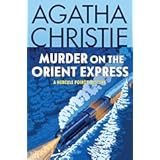
Agatha Christie, the undisputed queen of the whodunit, popularized the genre with her ingenious plots, and “Murder on the Orient Express” remains one of her most iconic works. When Hercule Poirot investigates a murder on a snowbound train, he uncovers a web of motives connecting every passenger to the victim, a man universally despised. While most detective stories culminate in the identification of a single culprit, this narrative bravely defies convention. Instead, Poirot deduces that “they all did it,” a collective act of vengeance.
This audacious reveal, where twelve individuals conspired to murder a man who escaped justice for a heinous crime, introduces a profound moral dilemma. Poirot’s decision to allow the conspirators to go free, accepting the “simpler” solution of a single, unknown assailant, underscores the complexities of justice and vengeance. The twist challenges the very foundations of the detective genre, moving beyond mere identification of a killer to a deeper exploration of collective responsibility and ethical compromise, firmly cementing its place among the most celebrated **whodunit movies**.
“Knives Out”: The Donut Hole’s Donut Hole
Rian Johnson’s “Knives Out” revitalizes the classic whodunit, delivering a series of clever twists culminating in a brilliantly layered reveal. The initial narrative leads the audience to believe that Marta, the kind-hearted nurse, accidentally overdosed Harlan Thrombey. However, through the meticulous deduction of Benoit Blanc, we learn that Ransom, Harlan’s disinherited grandson, orchestrated a plot to frame Marta. This “reverse whodunit” structure expertly toys with audience expectations, showing them what *they think* happened before revealing the deeper truth.
The true genius of the finale lies in its meta-commentary on narrative construction, symbolized by Blanc’s “donut hole” analogy. Ransom’s plan, while intricate, had a critical flaw: Marta’s inherent goodness led her to administer the correct medication despite his sabotage. Furthermore, Ransom’s accidental confession to the murder of the housekeeper, recorded through a trick of a voice changer, ensures his downfall. This intricate dance of misdirection and counter-misdirection showcases a masterful understanding of how to build suspense and deliver satisfying, multi-layered **plot twists**.
“Scream”: The Duo Behind the Ghostface Mask
“Scream” redefined the slasher genre by infusing it with meta-commentary and self-awareness, consistently playing with audience expectations regarding horror tropes. The mystery of Ghostface’s identity keeps viewers guessing throughout, as the masked killer taunts and hunts the protagonists. The final confrontation, a chaotic house party, initially suggests a single, deranged killer. However, the revelation that protagonist Sidney Prescott’s seemingly loyal boyfriend Billy Loomis, and his accomplice Stu Macher, are both the Ghostface killers is a visceral shock.
This dual killer twist dramatically amplifies the betrayal and psychological trauma, as it shatters Sidney’s sense of security and intimacy. The killers’ deranged explanations, infused with a dark, comedic energy, reveal their intricate planning and shared motive, a twisted desire for revenge fueled by past grievances. “Scream” innovated by breaking the conventional “single killer” rule, proving that sometimes, the most terrifying truth is that evil can manifest in multiple, unexpected forms, making it a pivotal entry in the canon of self-aware **whodunit movies**.
“Clue”: The Butler Did It… and Everyone Else
The comedic masterpiece “Clue,” based on the iconic board game, is famed for its multiple endings, each delivering its own brand of humor and surprising revelations. While the film presents various scenarios, the third ending is widely considered the definitive and most elaborate. In this intricate conclusion, the butler, Wadsworth, reveals that almost all the guests were responsible for at least one murder, each driven by their own motives related to blackmail. However, the twist deepens dramatically: Wadsworth himself is the real Mr. Boddy, orchestrating the entire night’s chaos, and has even killed the singing telegram girl.
As if this wasn’t enough, the “closeted” Mr. Green then shoots Wadsworth, revealing himself to be an undercover FBI agent. This rapid-fire succession of reveals, each topping the last, showcases a brilliant blend of farce and meticulous plotting. The film playfully lampoons the conventions of the **whodunit movies**, reveling in its own absurdity while still delivering a surprisingly coherent, albeit complicated, solution. It highlights how exaggeration and self-referential humor can enhance, rather than detract from, the impact of intricate **plot twists**.
“Memento”: The Unreliable Architect of Vengeance
Christopher Nolan’s “Memento” is a narrative puzzle box, told in reverse chronological order, that plunges viewers into the fragmented mind of Leonard Shelby, a man with anterograde amnesia. His quest for his wife’s killer is driven by a profound sense of loss and a tattoo-laden memory system. The film constantly challenges the audience’s perception of truth, as Leonard himself cannot form new memories and relies on photographs and notes. However, the climactic revelation, delivered by his “friend” Teddy, shatters Leonard’s carefully constructed reality.
Teddy reveals that Leonard already found and killed the man he blamed for his wife’s death a year prior. Since then, Teddy has been manipulating Leonard, using his amnesia to frame various individuals, giving him a continuous reason to live. More profoundly, Teddy exposes that the story Leonard tells about Sammy Jankis, an amnesiac who accidentally overdosed his wife, is actually Leonard’s own repressed memory. This devastating self-deception, where Leonard is the unreliable narrator of his own tragedy, is a psychological tour-de-force, transforming the very nature of revenge and memory within **whodunit movies**.
“The Usual Suspects”: The Devil’s Greatest Trick
Few cinematic reveals have achieved the legendary status of “The Usual Suspects,” a film built entirely around the power of suggestion and an unreliable narrator. Verbal Kint, a seemingly unassuming con artist, recounts the convoluted tale of a disastrous job and the mythical crime lord Keyser Söze to an FBI agent. The agent initially believes Kint’s fabricated story, particularly his identification of the charismatic Keaton as Söze. However, the true shock comes in the film’s final moments.
As Kint leaves, the FBI agent notices details in his office, realizing Kint has spun his elaborate narrative from random objects and names around the room. Simultaneously, a survivor of the massacre provides a sketch of Keyser Söze, unequivocally identifying Kint himself. This reveal, where the seemingly weak and disabled Verbal Kint is actually the fearsome mastermind Keyser Söze, is a masterclass in narrative misdirection. It underscores the incredible power of storytelling and persuasion, demonstrating how the devil’s greatest trick was indeed convincing the world he didn’t exist, a timeless example of a perfectly executed **plot twist** in **whodunit movies**.
Case Closed: Your Whodunit Questions Answered
What is a ‘whodunit’ movie?
A ‘whodunit’ movie is a mystery film focused on finding out who committed a crime. These films use intricate storytelling and misdirection to surprise the audience with a shocking plot twist.
Why are plot twists important in whodunit movies?
Plot twists are crucial because they significantly enhance the viewing experience, turning a good film into an unforgettable event. They redefine everything audiences thought they knew, compelling them to re-evaluate preceding moments.
What is ‘narrative misdirection’ in a whodunit movie?
Narrative misdirection is a key technique in whodunit films where filmmakers cleverly mislead the audience with false clues or information. It’s an intricate balance between what is shown and what is hidden, designed to heighten the surprise of the final reveal.
What makes a plot twist successful in these films?
A successful plot twist isn’t just a surprise; it’s logically integrated into the story, yet unforeseen. It recontextualizes the entire viewing experience, making the audience rethink previous events and piece together clues in retrospect.